

How to Spot a Genuine Antique Cut Diamond
A diamond can look antique without actually being old.
Modern cutters can produce diamonds inspired by historic Old Mine, Old European and Rose Cuts. These can be beautiful genuine diamonds in their own right, but they are not necessarily historic stones.
The important distinction, therefore, isn’t simply whether the diamond is real. Both an antique diamond and a modern reproduction can be genuine natural diamonds.
The question is when and how the stone was cut.
Several characteristics can help build that picture.
Look at the Faceting
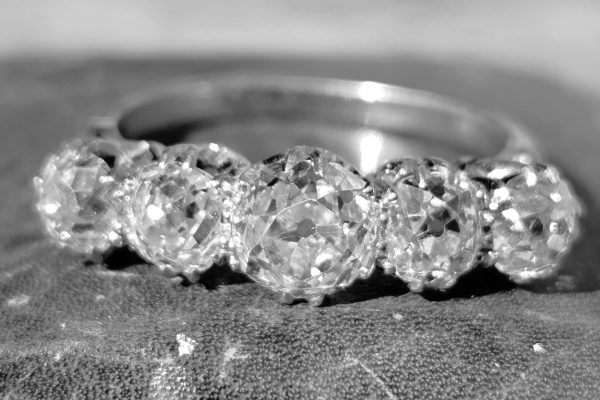
Genuine antique diamonds were cut by hand rather than to today’s tightly controlled computer-generated proportions.
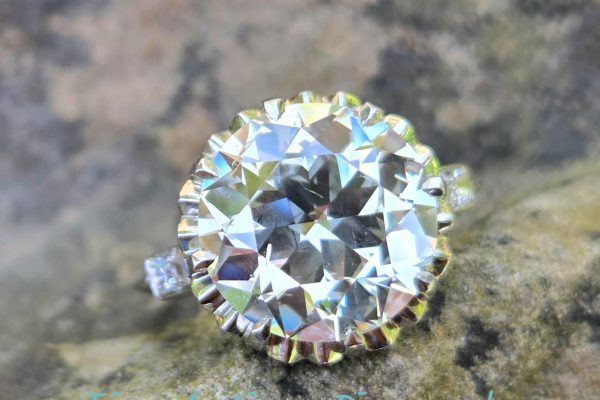
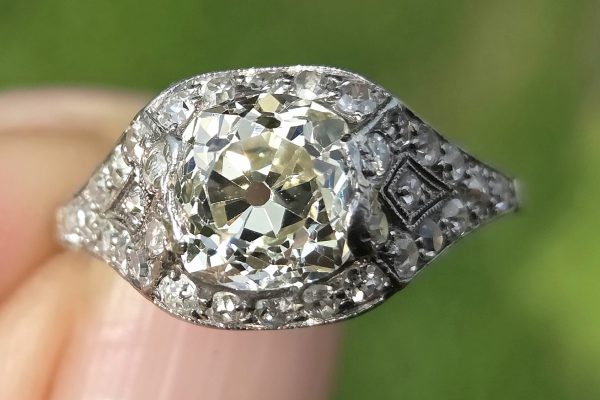
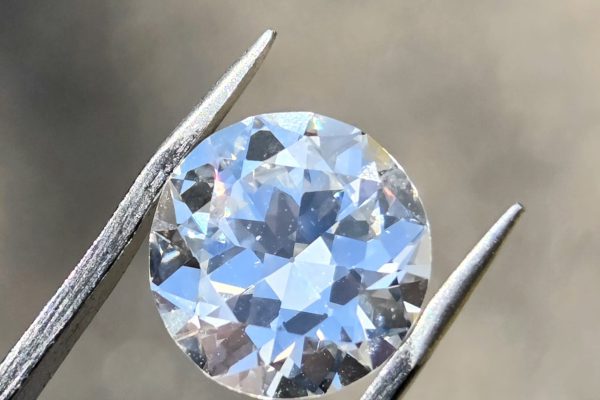
Look closely and you may notice subtle variations in facet size, alignment and symmetry. An Old Mine Cut might not form a perfectly regular cushion; an Old European Cut might not be perfectly circular.
Rather than detracting from the stone, these slight irregularities can be evidence of the traditional cutting methods used to create it.
A modern antique-inspired diamond may deliberately reproduce an old facet pattern while achieving considerably greater symmetry.
Examine the Culet
The culet is one of the classic characteristics to examine.
Many antique Old Mine and Old European Cut diamonds have a deliberately open culet at the bottom of the stone. Viewed face-on, this can appear as a small facet or opening through the centre.
A modern diamond will more commonly terminate in a very fine point.
However, an open culet should never be used as the sole test of age. Modern cutters can reproduce this feature.
Examine the Girdle
The girdle forms the outer edge of the diamond between its crown and pavilion.
Historic cutting and finishing techniques can leave a different girdle texture from that produced by modern polishing equipment. An experienced specialist may therefore examine the girdle under magnification for evidence consistent with an older stone.
Again, this is one clue rather than definitive proof by itself.
Look for Signs of Age
A diamond is extremely hard, but an antique stone may still show evidence of a long life.
Under magnification, there may be subtle wear around facet junctions or occasional tiny abrasions and chips consistent with decades of use.
Condition varies enormously, though, and age should never be determined simply because a stone shows wear. Some genuinely old diamonds have survived in remarkable condition.
Consider the Whole Piece
A diamond shouldn’t necessarily be assessed in isolation.
Its setting, construction, metalwork, hallmarks, design and provenance can all contribute to understanding a piece of jewellery.
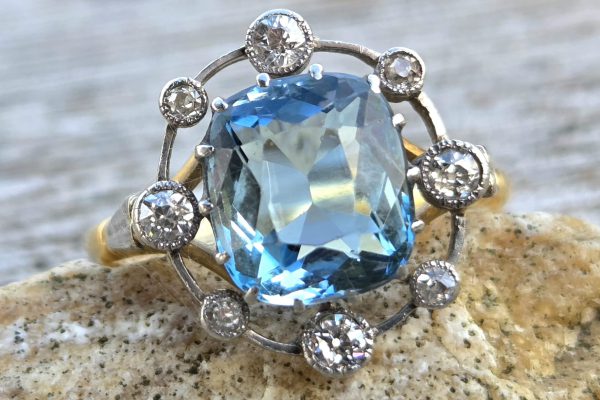
A Victorian-style ring containing an old-looking diamond isn’t automatically Victorian, just as an antique diamond can later have been reset into a newer piece of jewellery.
Establishing age is therefore often about building a body of evidence rather than relying on one identifying feature.


Antique Cut or Antique-Inspired?
There is nothing inherently wrong with a newly cut diamond made in an antique style. For someone who simply loves the appearance of broad facets and an open culet, it can be an attractive choice.
But it is important that the distinction is understood when buying.
A genuinely antique diamond carries something a reproduction cannot recreate: its own history.
The irregularities in its shape, the character of its facets and the evidence of hand cutting belong to the stone itself. For many collectors, that connection with the past is a fundamental part of its appeal.
When buying an important antique diamond, ask questions about the stone, its setting and any available documentation or provenance. At Fine Antique Diamonds, we are always happy to provide further photographs, videos and information about an individual piece before purchase.


